- Why outdoor countertop materials require different thinking
- Which is better for outdoor kitchen, quartz or granite?
- Granite countertops for outdoor kitchens
- Quartz countertops for outdoor kitchens
- Heat resistance and cooking performance
- Weather exposure and long-term durability
- Maintenance and sealing expectations
- Appearance, color variation, and design flexibility
- What is the best stone for an outdoor kitchen?
- Cost considerations and long-term value
- Making the right choice for your outdoor kitchen
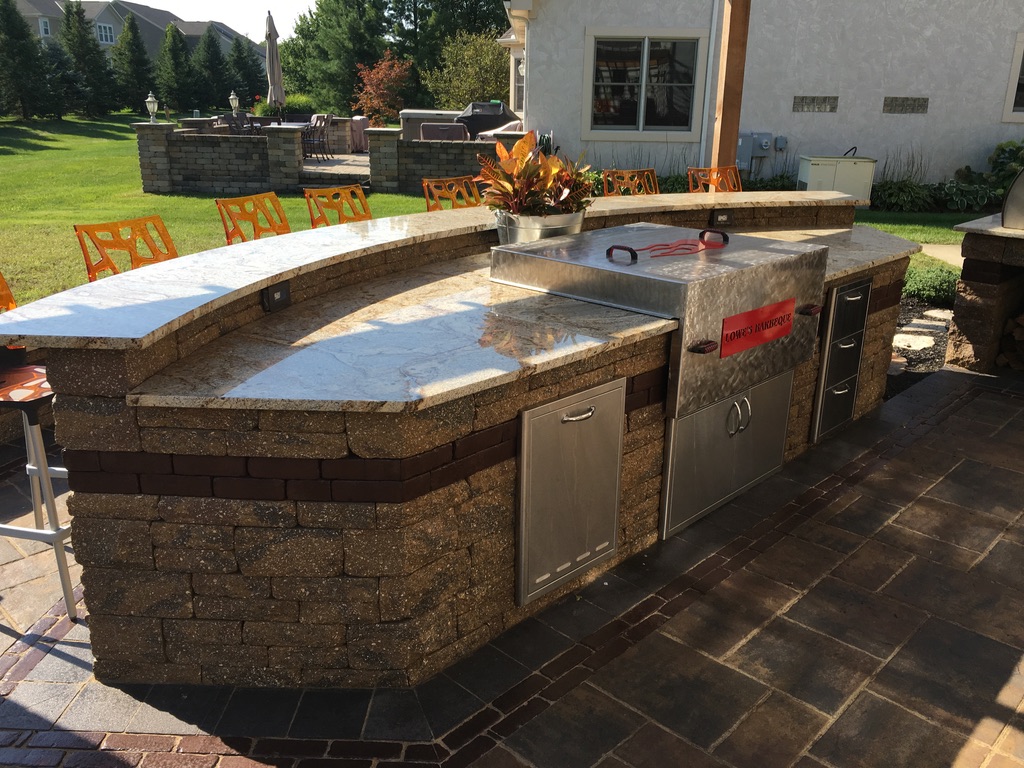
Outdoor kitchens have become a centerpiece of modern backyards, transforming patios into true gathering spaces. As these spaces grow more sophisticated, material choices matter more than ever. One of the most common questions we hear during planning is whether granite or quartz is the better countertop option outdoors.
Both materials perform well indoors, but outdoor environments introduce entirely different challenges. Sun exposure, heat from grills, moisture, and seasonal temperature changes all affect how surfaces age. When designing Outdoor Kitchens that are meant to last, countertop performance matters just as much as appearance.
We approach this question from a practical standpoint. The goal is not just choosing what looks good on day one, but what continues to perform year after year in real outdoor conditions.
Why outdoor countertop materials require different thinking
Outdoor kitchens live in an uncontrolled environment. Unlike indoor spaces, they are exposed to UV rays, rain, snow, humidity, and heat fluctuations. Materials that thrive inside a climate-controlled home may struggle when exposed to the elements.
When we design Outdoor Living & Hardscape Design projects, we prioritize materials that naturally tolerate these conditions. Countertops must handle hot cookware, resist fading, and remain structurally stable throughout seasonal changes. A failure in any of these areas can shorten the lifespan of the entire kitchen.
Choosing the right countertop material protects your investment. It also ensures your outdoor kitchen remains functional, safe, and enjoyable long term.
Which is better for outdoor kitchen, quartz or granite?
This is where the comparison becomes clear. Granite is a natural stone formed under intense heat and pressure, making it inherently resilient. Quartz, while durable indoors, is an engineered material held together with resins that react differently outdoors.
Granite handles direct sunlight and heat without breaking down. Quartz can fade, discolor, or crack when exposed to UV rays and high temperatures. Even partial sun exposure can cause issues over time.
For fully exposed Outdoor Kitchens, granite consistently outperforms quartz. Covered patios may reduce risk, but quartz still carries long-term durability concerns outdoors.
Granite countertops for outdoor kitchens
Granite has been used in outdoor architecture for centuries, and for good reason. It is highly heat resistant, naturally durable, and well suited for exterior environments. Hot pans, grill flare-ups, and pizza ovens pose little threat to properly installed granite.
Granite is porous, which means sealing is required. However, modern sealers make maintenance manageable and long-lasting. When sealed correctly, granite resists stains while allowing trapped moisture to evaporate naturally.
Each slab of granite is unique. This natural variation adds character and depth to outdoor kitchens, especially when paired with stone patios or masonry features.
Quartz countertops for outdoor kitchens
Quartz countertops are engineered using crushed stone mixed with binders and pigments. Indoors, they are valued for consistency and low maintenance. Outdoors, those same binders become the material’s biggest weakness.
UV exposure can cause quartz surfaces to fade or yellow. Prolonged heat can soften resins, leading to surface damage or cracking. Once this happens, repairs are difficult and often impossible.
Quartz may work in enclosed or climate-controlled outdoor rooms. However, for true outdoor kitchens exposed to the elements, it introduces unnecessary risk.
Heat resistance and cooking performance
Outdoor cooking produces intense, localized heat. Countertops must withstand hot cookware without hesitation. Granite excels in this area because it forms naturally under extreme temperatures.
Quartz does not share the same heat tolerance. Trivets become a necessity rather than a convenience, limiting how freely the space can be used. Repeated exposure to heat can permanently damage the surface.
For homeowners who cook often or entertain large groups, granite provides confidence. You don’t have to think twice about where you set things down.
Weather exposure and long-term durability
Outdoor countertops endure rain, snow, humidity, and freeze-thaw cycles. Granite’s natural structure allows it to expand and contract without cracking when properly installed. This makes it well suited for Ohio’s changing seasons.
Quartz struggles under these conditions. The stone particles and resins expand at different rates, creating internal stress over time. This often leads to surface cracking or separation.
For Custom Outdoor Living Spaces designed to last decades, granite offers more reliable long-term performance.
Maintenance and sealing expectations
Granite requires periodic sealing, but the process is straightforward. Many modern sealers last years and can be reapplied easily. Routine cleaning typically requires nothing more than mild soap and water.
Quartz requires less daily maintenance indoors, but outdoor exposure changes that equation. UV damage and heat discoloration are not maintenance issues; they are permanent failures. Replacement is often the only solution.
In practical terms, granite’s manageable upkeep is preferable to quartz’s long-term vulnerability outdoors.
Appearance, color variation, and design flexibility
Quartz offers uniform colors and patterns, which appeals to homeowners seeking consistency. Granite provides natural movement, variation, and depth that many find more visually interesting outdoors. No two slabs are exactly alike.
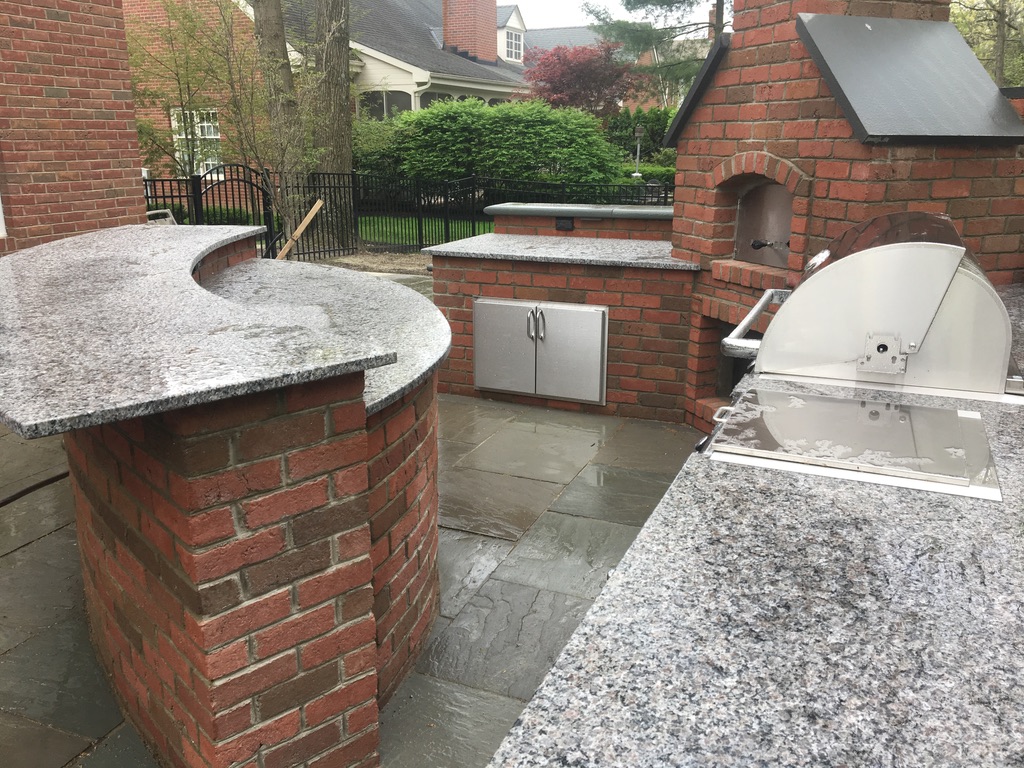
Granite integrates seamlessly with other natural materials used in Outdoor Kitchens, such as stone walls, pavers, and fire features. This cohesion helps outdoor spaces feel intentional rather than pieced together.
Design decisions made for countertops often align with broader landscape materials. This mirrors many of the considerations outlined in Comparing concrete vs natural stone for hardscaping projects.
What is the best stone for an outdoor kitchen?
When evaluating performance alone, granite consistently ranks as one of the best stones for outdoor kitchens. It handles heat, weather, and UV exposure better than most alternatives. Proper installation and sealing further extend its lifespan.
Other natural stones can work depending on design goals and budget. The key is selecting materials meant to coexist with outdoor conditions, not fight against them.
Granite continues to be a dependable choice for homeowners who want durability without sacrificing visual appeal.
Cost considerations and long-term value
Granite and quartz can fall into similar price ranges initially. However, outdoor suitability changes the value conversation. Granite’s durability often translates into fewer repairs and longer service life.
Quartz may appear cost-competitive upfront, but replacement costs should be factored in. UV damage and cracking are typically not covered under warranties for outdoor use.
From a long-term value perspective, granite usually delivers a stronger return on investment for outdoor kitchens.
Making the right choice for your outdoor kitchen

Choosing between granite and quartz is about more than aesthetics. It’s about how the material performs where you live and how you use the space. Outdoor kitchens deserve materials built for exposure, not protection.
Granite consistently meets those demands. Quartz, while excellent indoors, introduces avoidable risks outdoors. For homeowners planning permanent outdoor kitchens, granite remains the safer and more reliable choice.
The right countertop supports years of cooking, gathering, and enjoyment. That’s ultimately what a great outdoor space is meant to provide.
About the Author
Jeremy is the owner of JML Design – Build, an award-winning hardscape and outdoor living company serving Central Ohio. With more than 40 years of combined industry experience behind the company’s design and build philosophy, Jeremy is dedicated to helping homeowners transform their outdoor spaces into beautiful, functional environments that enhance everyday living. His approach focuses on thoughtful planning, craftsmanship, and creating outdoor spaces that feel like a natural extension of the home.
Through JML Design – Build, Jeremy specializes in designing and constructing custom outdoor living environments including patios, outdoor kitchens, fire features, retaining walls, and professionally designed landscapes. He believes that a well-planned outdoor space should reflect the homeowner’s lifestyle—whether that means entertaining guests, enjoying family barbecues, or creating a peaceful backyard retreat.