An outdoor kitchen transforms a backyard into a culinary and social hub where meals are prepared, drinks are mixed and memories are made. When homeowners start dreaming about adding one, the first question is always the same: How much will it cost? The answer depends on everything from the size of the space to the finishes and appliances you choose, but reliable estimates are available. This article unpacks the average costs, explores the factors that influence pricing and offers practical guidance to help you plan an outdoor kitchen that fits your vision and budget.
- What is the average cost for an outdoor kitchen?
- How much should I budget for an outdoor kitchen?
- How much is a basic outdoor kitchen?
- Does an outdoor kitchen increase house value?
- Factors influencing outdoor kitchen costs
- Material and appliance choices: durability matters
- Design considerations and popular add‑ons
- Steps to plan and budget your outdoor kitchen
- Real‑life examples and cost ranges
- Conclusion: investing in outdoor living
What is the average cost for an outdoor kitchen?
The national average for an outdoor kitchen falls somewhere in the middle of a very broad range. Reliable sources estimate that most projects cost between $6,000 and $30,000, with an average near $16,500. Why such a wide range? Because a simple grill island with modest counters costs far less than a fully customized space with high‑end appliances, cabinetry, lighting and a bar. When looking at costs per square foot, most projects fall between $33 and $130 per square foot. For a typical 200‑ to 300‑square‑foot kitchen—large enough for a grill, sink, refrigerator and seating—the total can range from $6,600 to $39,000.
Local markets can be higher or lower than the national averages. For example, design‑build firms in the Cincinnati area report that a basic grill island typically costs $10,000 to $18,000, a mid‑range kitchen falls between $20,000 and $35,000, and luxury setups with premium materials and multiple appliances can run $35,000 to $60,000 or more. These figures include professional design, permits, utility connections and weatherproof finishes—all crucial in Ohio’s freeze‑thaw climate. Regional differences also arise from labor rates and the cost of transporting heavy materials. A similar project might cost less in a rural county than in a major city where skilled tradespeople are in higher demand.
How much should I budget for an outdoor kitchen?
Budgeting begins with clarifying your priorities. Are you looking for a small prep area with a built‑in grill and a few cabinets, or are you dreaming of a complete entertainment suite with bar seating, refrigeration and a pizza oven? As a rough guideline, homeowners should plan to spend 10–15% of their home’s value on outdoor living improvements if they aim for a balanced return when selling. For kitchens specifically, start by estimating $33–$130 per square foot and then add allowances for appliances and finishes.
Industry data suggest allocating funds like this: materials (35–45%), labor (30–40%), equipment and logistics (10–15%), and design, permits and overhead (10–15%). In practical terms, that means a $30,000 project might break down to roughly $12,000 in stone, cabinets, countertops and appliances; $9,000 in skilled labor; $4,500 for equipment, delivery and disposal; and $4,500 for design fees, permits and insurance. Remember that utility connections—gas, electrical and water—often account for 20–40% of the total, so building near the house can save considerable money. When budgets are tight, phasing the project (patio this year, kitchen next year, pergola later) spreads the investment over time.
How much is a basic outdoor kitchen?
For many homeowners, a basic outdoor kitchen is the perfect starting point. These setups typically include a built‑in grill, a counter for prep work, storage for utensils and perhaps a small sink. Prefab kits or grill islands that include these essentials start around $2,000 and can run up to $10,000. If you opt for a custom core kitchen with an island, access doors, side burners and a refrigerator, expect costs closer to $10,000 to $18,000. Basic setups keep the footprint small—often under 100 square feet—so they stay on the lower end of the per‑square‑foot range.
Even within a basic kitchen, choices matter. A quality grill can run from $100 for a portable model to $5,000 or more for a built‑in unit. Countertops start around $15 per square foot for granite or concrete and rise with premium materials. Cabinets range from $1,700 to $2,400 per unit, and you’ll add a few hundred dollars for plumbing and electrical hookups. When budgets allow, it’s smart to invest in durable appliances and surfaces up front because replacing them later often costs more in labor and materials.

Does an outdoor kitchen increase house value?
Adding an outdoor kitchen isn’t just about convenience; it can be a sound investment. Real‑estate surveys report that homeowners typically recover 60% to 100% of their outdoor kitchen investment when selling. High‑quality materials, integrated design and covered seating areas drive better returns, while flimsy finishes and stand‑alone grills offer less appeal. Location matters too: outdoor living is a major selling point in temperate states like Ohio where three‑season use is possible.
The lifestyle benefits are harder to quantify but equally compelling. Families gain a place to cook together, entertain friends and relax outdoors, which enhances everyday enjoyment. Buyers also perceive value in move‑in‑ready outdoor spaces; they’re willing to pay a premium to avoid tackling construction after closing. When evaluating your return, consider both resale value and the intangible benefits of extending your living space into the backyard.
Factors influencing outdoor kitchen costs
Several key factors determine where your project lands on the cost spectrum. Understanding them helps you control expenses without sacrificing quality.
- Size and Layout. The larger the kitchen, the higher the cost. Most outdoor kitchens range from 100 to 400 square feet, and costs typically fall between $33 and $130 per square foot. A straight‑line layout requires less framing and fewer materials than an L‑shaped or U‑shaped design. Larger kitchens also allow room for appliances, seating and storage but increase the amount of masonry or cabinet work required.
- Materials. Countertops vary widely: granite costs $15–$140 per square foot, stainless steel runs $60–$100 per square foot, and concrete ranges from $70 to $140 per square foot. Cabinet costs range from $1,700 to $2,400 per unit, with mid‑size projects running $10,000–$15,000. Weather‑resistant materials like marine‑grade HDPE, stone veneer and stainless steel cost more up front but outlast wood or mild steel in wet climates. Flooring choices—pavers, natural stone, concrete or composite decking—also influence the budget, ranging from $3 to $60 per square foot.
- Appliances and Fixtures. A high‑quality grill is the heart of the kitchen and typically costs $1,500–$10,000. Refrigerators run $400–$4,000, sinks cost $215–$630 and ice makers range from $300 to $2,000. Vent hoods, necessary under a roof or pergola, add $2,000–$6,000. Additional features like pizza ovens, wine coolers, kegerators or cocktail stations quickly push projects into the higher price tiers.
- Utilities and Installation. Running gas, water and electrical lines costs $250–$2,000. Professional installation fees range from $650 to $1,500, but labor can account for 20–40% of the total budget. Installing the kitchen near the house reduces utility runs and often eliminates the need for a second gas meter or extended trenching.
- Permits and Codes. Municipal permits for patios, plumbing and electrical work run $50 to $500 each, with total permit costs typically falling between $250 and $2,000. Complying with local codes ensures safety and avoids costly rework when selling your home.
Material and appliance choices: durability matters
Selecting materials for countertops and cabinets is about more than aesthetics. Outdoor kitchens must withstand Ohio’s wide temperature swings, humidity and UV exposure. Granite remains a popular choice because it is heat‑resistant and durable; its cost ranges from $30 to $85 per square foot for common varieties and up to $200–$3,000 for exotic slabs. Quartz offers a non‑porous, low‑maintenance surface but can fade when exposed to direct sunlight for extended periods. Concrete delivers a custom look and pairs well with modern designs, but it requires regular sealing and may crack without expansion joints.
Cabinets built from marine‑grade HDPE (high‑density polyethylene) resist water, insects, UV damage and mildew and hold up better than wood or stainless steel in wet environments. Stainless steel cabinets look sleek but can corrode near saltwater or chlorine; wood cabinets warp unless fully sheltered. Investing in quality cabinets protects your dishes and equipment and reduces maintenance.
Appliance choices shape both functionality and budget. A built‑in grill provides stability and longevity, but cart‑style grills are more affordable and easier to replace. Refrigerators, freezers and ice makers must be rated for outdoor use to handle extreme temperatures. If your budget is limited, prioritize cooking appliances and leave space in your layout for future additions. For more detailed guidance on countertop materials, check out this article on Is granite or quartz better for outdoor kitchens?.
Design considerations and popular add‑ons
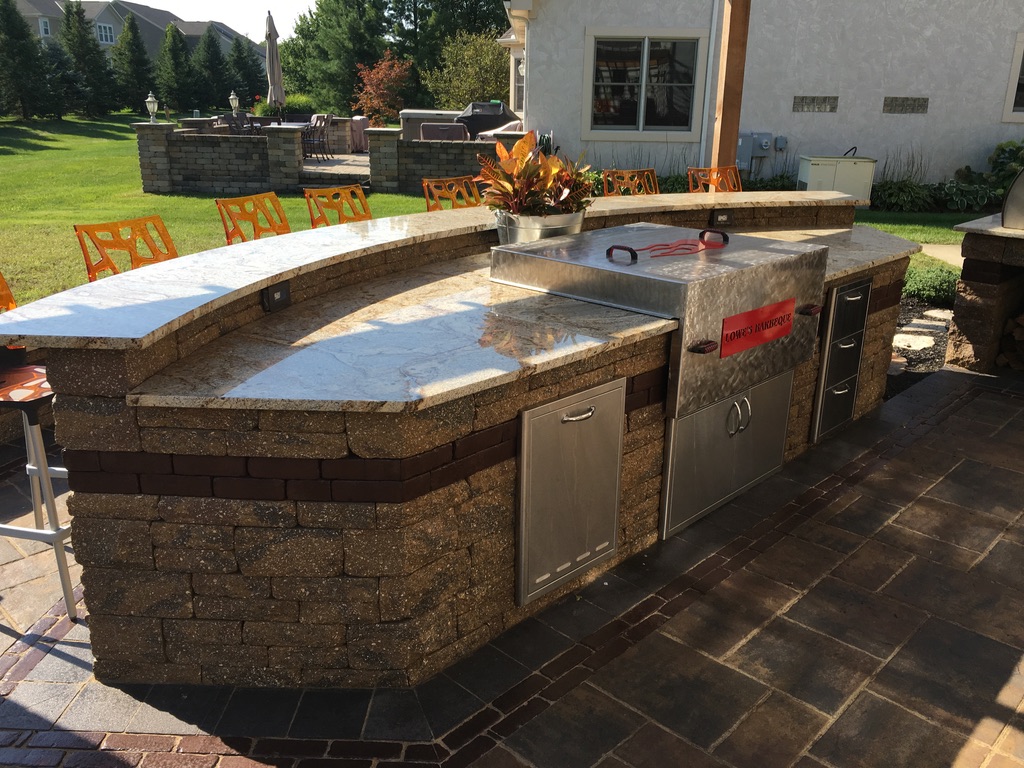
An outdoor kitchen is more than a collection of appliances. Design elements like layout, seating and shade determine how well the space works for cooking and entertaining. Straight‑line kitchens save space and money, while L‑shaped and U‑shaped layouts provide more prep area and natural zones for grilling, serving and cleaning. Incorporating bar seating or a raised counter turns the kitchen into a gathering spot, especially when you pair it with Outdoor Bar Design that complements your home.
Beyond the core kitchen, consider add‑ons that enhance comfort and functionality. Lighting makes evening cooking possible and costs about $260 per fixture. Pergolas, awnings or gazebos provide shade and weather protection and range from $2,100 to $6,100. Fire pits and fireplaces create year‑round appeal, costing $200–$20,000 depending on size and fuel type. Heaters extend the season and run between $100 and $500. Even small touches like built‑in trash bins, paper towel holders and utensil drawers make a kitchen more enjoyable to use.
Steps to plan and budget your outdoor kitchen
Creating a successful outdoor kitchen begins long before construction starts. The following steps help ensure your project stays on schedule and within budget:
- Define your goals and must‑haves. Make a list of desired features, then identify which are essential and which are wish‑list items. Prioritize cooking equipment, prep space and weather protection.
- Evaluate your site. Measure available space, note existing utilities and consider sun exposure and prevailing winds. Decide whether the kitchen will attach to an existing patio or require new construction. Choose a location close to the house to minimize gas, water and electrical runs.
- Set a budget range. Use the per‑square‑foot guide and component costs above to estimate a range. For example, a 150‑square‑foot kitchen at $65 per square foot might cost about $9,750 before appliances and finishes. Add line items for your chosen grill, cabinets, counters, appliances and permits.
- Hire the right professionals. Design‑build firms or New Albany Hardscape Design specialists can develop detailed plans, obtain permits and coordinate trades. Professional design adds $500 to $3,000 to the budget but often saves money by avoiding mistakes.
- Compare quotes and check credentials. Request estimates from multiple contractors, paying attention to materials, labor, warranties and proposed timelines. Verify licensing, insurance and references.
- Plan for the future. Even if you can’t afford every feature now, design your kitchen so you can add appliances or seating later. Leave open spaces or stubbed‑out utilities for future upgrades.
- Consider DIY vs. professional installation. Doing your own masonry or carpentry can cut costs, but gas, plumbing and electrical work should be handled by licensed tradespeople. Many homeowners choose a hybrid approach: they build the structure and hire pros for utilities and finish work.

Real‑life examples and cost ranges
Seeing how different levels of outdoor kitchens are priced helps clarify what your budget can buy. Below is a simplified table summarizing cost ranges for three tiers of outdoor kitchens, using data from national averages and Cincinnati‑area contractors:
| Kitchen Tier | Typical Features | Estimated Cost Range |
|---|---|---|
| Basic | Compact grill island, small counter, limited storage, optional sink or refrigerator | $4,000–$18,000 |
| Mid‑Range/Core | Built‑in grill, generous counter space, refrigeration, side burner, trash and storage bins | $10,000–$35,000 |
| Luxury/Ultimate | Multiple appliances (grill, smoker, pizza oven), bar seating, premium counters, HDPE or stone cabinets, vent hood, pergola or roof, lighting | $35,000–$60,000+ |
Remember that these ranges include design, materials, labor and utilities. A large, custom kitchen with exotic materials, audio‑visual systems and extensive masonry can exceed $100,000. Conversely, a simple DIY grill island on an existing patio can cost less than $5,000. Always align your choices with your cooking habits and long‑term plans.
Conclusion: investing in outdoor living
Building an outdoor kitchen is more than just adding a grill and counters; it’s a strategic investment in your home’s value and your quality of life. The average cost for an outdoor kitchen ranges from $6,000 to $30,000 with most homeowners spending around $16,500, but your final number will depend on size, materials, appliances and local labor rates. Thoughtful planning, material selection and professional guidance help you make smart choices and avoid costly missteps.
As someone who has guided many friends through backyard makeovers, I know that the most rewarding outdoor kitchens balance budget with function and style. Start with a clear vision, seek expert advice when needed and prioritize durable components that will weather Ohio’s changing seasons. Whether you opt for a modest grill island or a luxury cooking pavilion, your outdoor kitchen will quickly become a favorite gathering place for family and friends. If you’re ready to bring your idea to life, check out Outdoor Kitchens for inspiration or consult with specialists in Outdoor Kitchen Design to create a space tailored to your home.
About the Author
Jeremy is the owner of JML Design – Build, an award-winning hardscape and outdoor living company serving Central Ohio. With more than 40 years of combined industry experience behind the company’s design and build philosophy, Jeremy is dedicated to helping homeowners transform their outdoor spaces into beautiful, functional environments that enhance everyday living. His approach focuses on thoughtful planning, craftsmanship, and creating outdoor spaces that feel like a natural extension of the home.
Through JML Design – Build, Jeremy specializes in designing and constructing custom outdoor living environments including patios, outdoor kitchens, fire features, retaining walls, and professionally designed landscapes. He believes that a well-planned outdoor space should reflect the homeowner’s lifestyle—whether that means entertaining guests, enjoying family barbecues, or creating a peaceful backyard retreat.