Outdoor kitchens are no longer a rarity. They are spaces where families gather, friends laugh, and meals are shared under the open sky. Choosing the best material for outdoor countertops isn’t just about aesthetics. It affects how well your space stands up to heat, rain, and everyday wear. This guide will help you choose the right surface and explain which features matter most.
- What type of countertop is best for outdoors?
- Best material for outdoor countertops: options to consider
- Granite: classic durability and timeless appeal
- Quartz: low maintenance but UV sensitive
- Soapstone and natural stone alternatives
- Concrete, tile, and porcelain surfaces
- Stainless steel and other metal surfaces
- What to use for an outdoor kitchen counter?
- Which is better for outside, granite or quartz?
- Factors to consider when choosing an outdoor countertop
- Conclusion
What type of countertop is best for outdoors?
Materials that live outside must tolerate sun, moisture, and fluctuating temperatures without warping or cracking. For an outdoor surface, durability, heat resistance, and low maintenance matter more than the pattern on the slab. Natural stone like granite or soapstone, engineered surfaces like quartz and porcelain, and even stainless steel and concrete all behave differently when exposed to sunlight or snow. Your choice depends on how often you cook, where you live, and whether the counter will be covered by a roof or fully exposed.
Best material for outdoor countertops: options to consider
There is no single universal answer to which countertop is best. Each material offers a balance between durability, upkeep, cost, and visual appeal. The table below summarizes popular options and the attributes that make them stand out:
| Material | Key advantages | Considerations |
|---|---|---|
| Granite | Naturally heat‑resistant and scratch‑resistant; looks timeless and comes in many colors; handles sun and weather well | Requires periodic sealing; darker colors can get hot in direct sun; mid‑range cost |
| Quartz (engineered stone) | Dense, non‑porous surface that resists stains; consistent patterning; minimal daily maintenance | Not UV‑stable; can fade or yellow outdoors; less heat tolerant than natural stone; higher cost |
| Soapstone | Heat‑resistant and non‑porous; resists stains and acids; no sealing required and takes on a beautiful patina | Softer surface can scratch; limited color range; requires occasional oiling |
| Concrete | Highly customizable shape, color, and texture; can be reinforced for strength; natural rustic look | Porous and needs regular sealing; may crack with freeze–thaw cycles if not reinforced; mid‑range cost |
| Porcelain | Ultra‑dense and non‑porous; UV‑stable and won’t fade; resists heat, scratches, and staining; lightweight slabs | Brittle edges prone to chipping; limited edge profiles; fewer fabricators and lower resale value |
| Stainless steel | Resistant to heat, water, and stains; hygienic and easy to sanitize; modern, professional look | Can scratch and show fingerprints; needs professional installation; higher cost |
| Tile | Inexpensive and available in endless colors and patterns; easy to replace broken sections | Grout lines trap dirt and bacteria; tiles can crack or loosen in freeze–thaw climates; high maintenance |

Granite: classic durability and timeless appeal
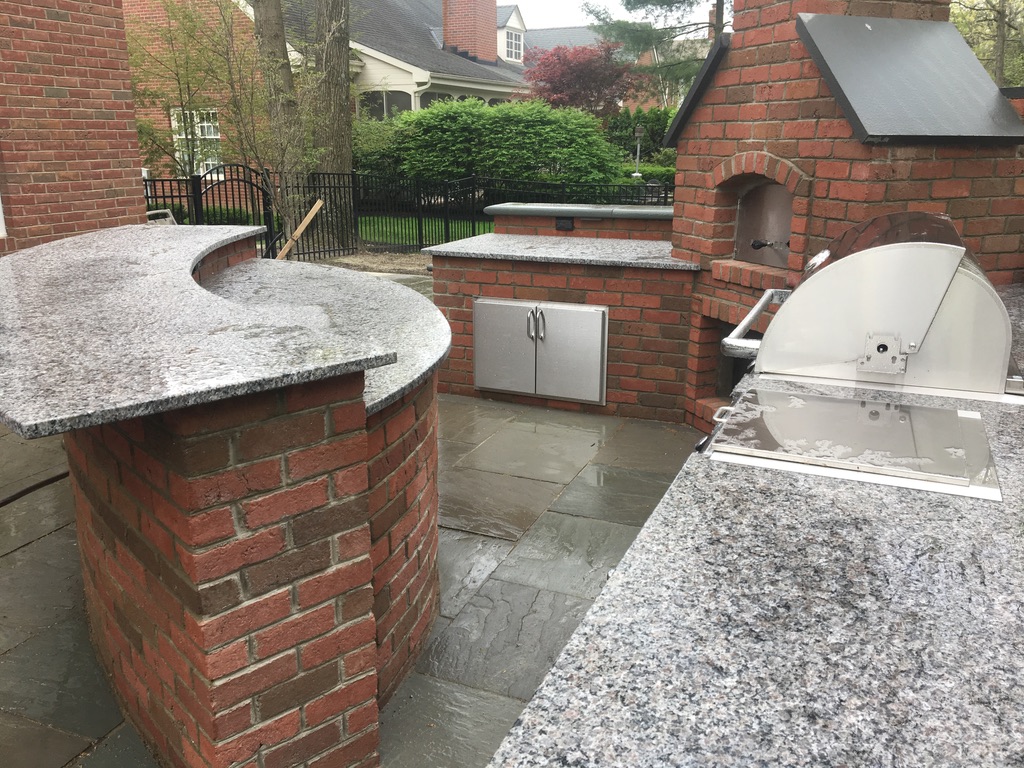
Granite forms deep within the earth, which gives it remarkable density and heat tolerance. Outdoor granite countertops resist scratches and dings and can handle hot pans and grill tools without damage. Its natural patterns range from subtle veins to dramatic speckles. Dark colors can absorb heat, so lighter shades or shade structures help keep the surface comfortable. Granite is porous and needs periodic sealing to prevent stains, but modern sealers make maintenance simple. With proper care, granite lasts for decades.
Quartz: low maintenance but UV sensitive
Quartz is an engineered stone made from crushed rock and resin. The non‑porous surface resists stains and scratches and doesn’t need sealing. However, the resins can fade or yellow when exposed to UV rays or high heat. For that reason, quartz works best under a roof or pergola rather than in full sunlight, and hot pots should always be set on trivets. Quartz often costs more than granite.

Soapstone and natural stone alternatives
Soapstone is a talc‑rich stone prized for its smooth feel and ability to handle heat. It resists stains and acids and doesn’t need sealing, but it is softer than granite and can scratch. Many homeowners embrace these marks as part of its developing patina. Soapstone’s palette runs from gray to green and requires occasional oiling to deepen its color. Other natural stones—such as quartzite, limestone, and bluestone—vary in look and performance; quartzite rivals granite in hardness, while limestone and bluestone offer rustic appeal but need sealing to prevent stains.
Concrete, tile, and porcelain surfaces
Concrete offers limitless customization, from color to shape, and can be reinforced for strength. It needs regular sealing, though, and may crack if freeze–thaw cycles are severe. Tile countertops are budget‑friendly and colorful, but grout lines trap dirt and the tiles themselves can crack in harsh weather. Porcelain is a non‑porous, UV‑stable engineered surface that mimics stone or concrete and resists heat, scratches, and stains. Its edges can chip and fabrication requires specialized expertise, yet porcelain is a strong option when you want a low‑maintenance surface that looks like marble. For more detail on porcelain benefits and drawbacks, see this expert guide on porcelain countertops.
Stainless steel and other metal surfaces
Professional chefs love stainless steel because it withstands heat, water, and stains and is easy to sanitize. Outdoors, it can handle hot cookware and cleans up with nothing more than a microfiber cloth and mild detergent. Brushed or matte finishes hide fingerprints, but the metal surface can scratch and feel cold. Installation is best left to professionals and starts at around $60 per square foot.
What to use for an outdoor kitchen counter?
Your final choice depends on how you cook, your climate, and your design goals. Granite or concrete stand up to heavy grilling and large gatherings, while quartz works best in covered spaces where UV exposure is limited. Soapstone and quartzite provide natural beauty with minimal upkeep, and stainless steel suits those seeking a sleek, modern look. Porcelain is ideal when you want a marble‑like surface that won’t fade or stain. To ensure appliances, sinks, and counters all work together, consult an Outdoor Kitchen Design specialist before ordering materials.
Which is better for outside, granite or quartz?
Granite is a natural stone that stands up to sun, heat, and seasonal change, while quartz is engineered with resins that can discolor or crack outdoors. Granite needs periodic sealing but stays structurally sound through rain, snow, and heat. Quartz performs better under a roof; exposed to the elements, it may fail over time. For outdoor kitchens that see weather year‑round, granite is generally the safer choice. For a detailed comparison, see Is granite or quartz better for outdoor kitchens?.
Factors to consider when choosing an outdoor countertop
Climate, maintenance, budget, and aesthetics all influence your choice. Salt air calls for rust‑resistant metals, while freeze–thaw cycles demand resilient stone that won’t crack. Granite and concrete need sealing; porcelain and stainless steel do not; tile demands the most upkeep. Tile is inexpensive but labor‑intensive, whereas natural stone and metals require a higher upfront investment. Consider how the countertop interacts with your patio materials and home style; a rustic space might pair with concrete or bluestone, whereas a modern design benefits from stainless steel or porcelain. For cohesive results, collaborate with a Custom Outdoor Living Spaces specialist and explore broader Outdoor Living Design options through the Best Hardscape Company.
Conclusion
Choosing the best material for outdoor countertops is equal parts practical planning and personal preference. Consider how you cook, the weather in your region, how much upkeep you can handle, and what style suits your space. Granite and concrete offer proven durability; soapstone and quartzite provide natural character; porcelain and stainless steel deliver sleek, low‑maintenance surfaces; and tile and concrete satisfy budget‑friendly custom designs. The right choice is the one that serves your lifestyle and makes your outdoor kitchen a place you want to spend time.
About the Author
Jeremy is the owner of JML Design – Build, an award-winning hardscape and outdoor living company serving Central Ohio. With more than 40 years of combined industry experience behind the company’s design and build philosophy, Jeremy is dedicated to helping homeowners transform their outdoor spaces into beautiful, functional environments that enhance everyday living. His approach focuses on thoughtful planning, craftsmanship, and creating outdoor spaces that feel like a natural extension of the home.
Through JML Design – Build, Jeremy specializes in designing and constructing custom outdoor living environments including patios, outdoor kitchens, fire features, retaining walls, and professionally designed landscapes. He believes that a well-planned outdoor space should reflect the homeowner’s lifestyle—whether that means entertaining guests, enjoying family barbecues, or creating a peaceful backyard retreat.